
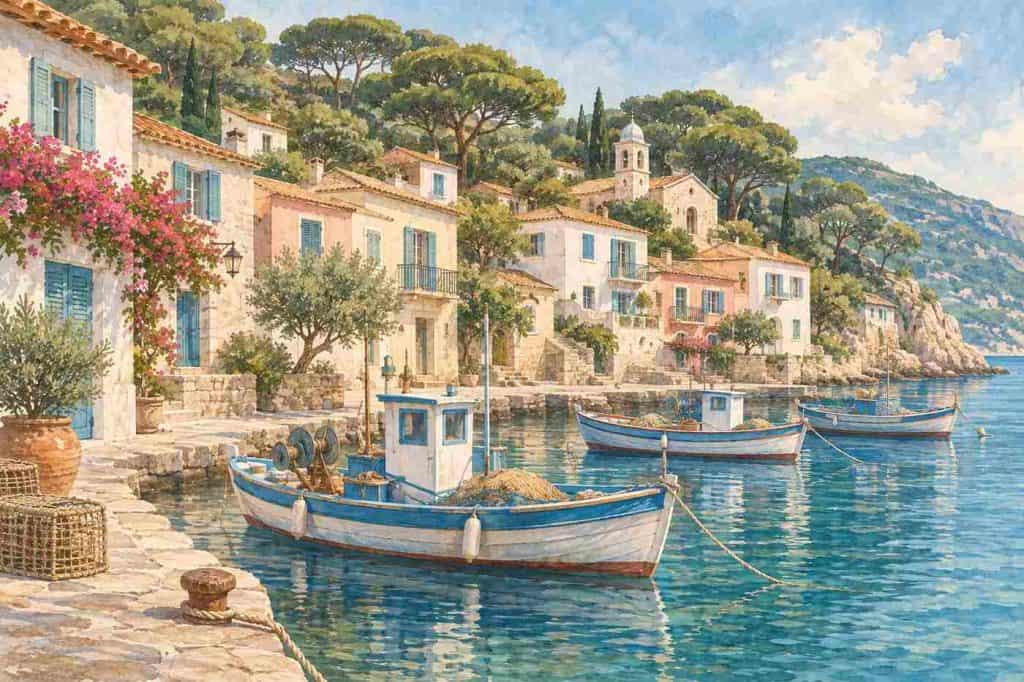
In short: Saint-Jean-Cap-Ferrat was a small fishing hamlet of Villefranche until it became its own commune on 29 January 1904. King Leopold II of Belgium, Béatrice Ephrussi de Rothschild and the Grand-Hôtel turned it into a winter retreat. Today the commune covers 2.48 square kilometres and had 1,531 residents in 2023.
Cap Ferrat is a wooded peninsula between Nice and Monaco, and Saint-Jean-Cap-Ferrat is the commune that covers almost all of it. Its name is known around the world for villas and wealthy residents, but the village has a longer and more modest history of hermits, forts, fishermen and a tram line. This guide follows that story using the town hall’s own heritage trail, the national heritage inventory and Wikipedia. It is part of an independent guide to the cape, not linked to any hotel or business; see our Cap Ferrat Chronicle home page for the other guides.
Some definitions. A commune is the smallest unit of local government in France, with its own mayor and council. The County of Nice was the territory around Nice ruled by the House of Savoy for most of its history before it became French in 1860. A semaphore is a coastal signal station for watching and signalling to ships.
How did Saint-Jean-Cap-Ferrat begin?
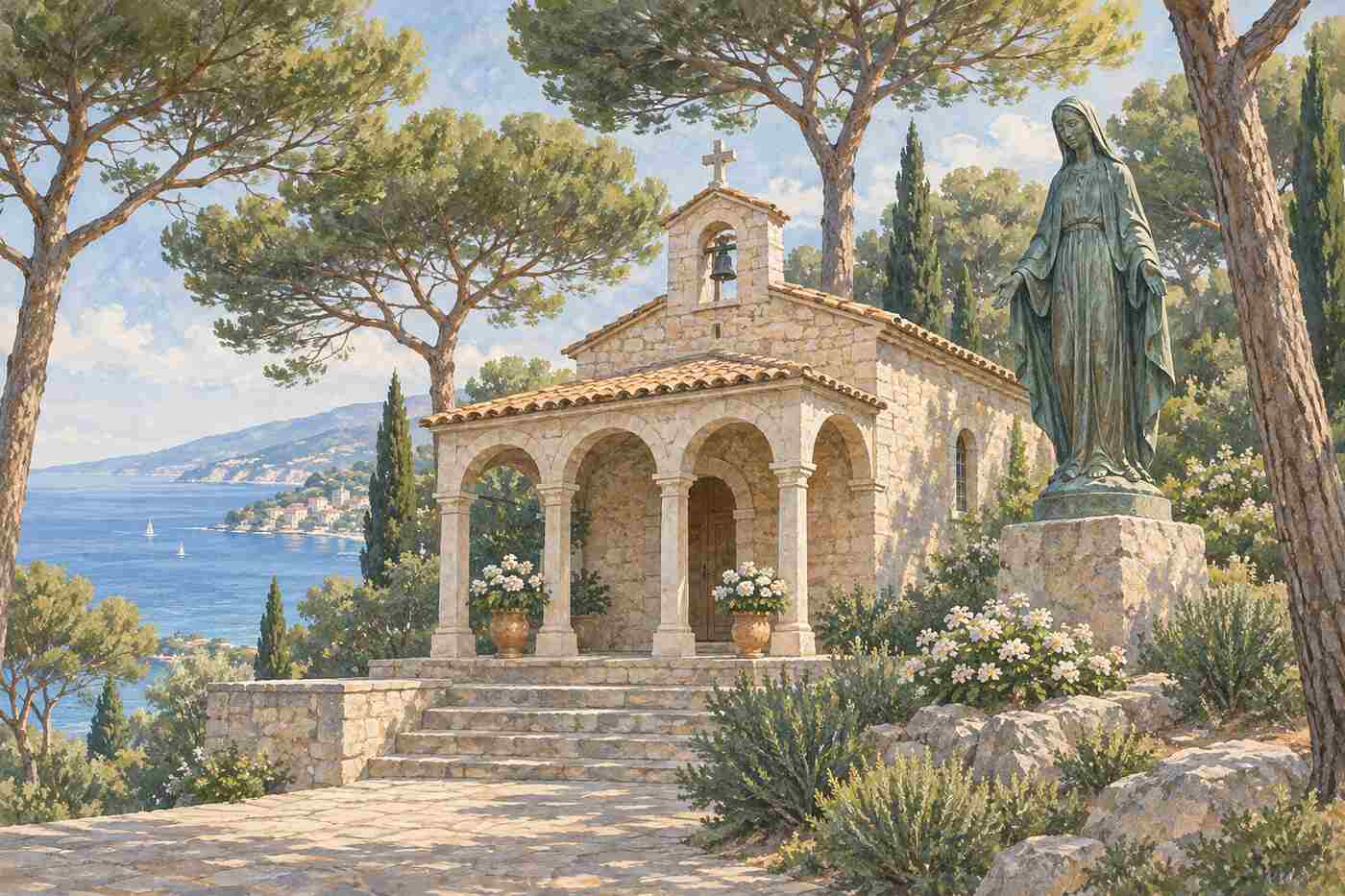
Wikipedia records that the ancient Greeks knew the site as Anao and that it was settled by Celto-Ligurian tribes and later by the Lombards in the late sixth century. The peninsula’s oldest local figure is Hospitius, a hermit who lived in a tower on its eastern point. The town hall’s heritage trail says he died in 580, and that a chapel was built on the ruins of his sanctuary in 1075. The present Saint-Hospice chapel was restored by Duke Charles Emmanuel II of Savoy in 1655 and has been a listed historic monument since 1929.
The village church of Saint Jean-Baptiste dates back to the 11th century, according to the town hall. Its patron saint, John the Baptist, is celebrated every year on 24 June.
Forts, Savoy and the road to France
From 1388 the County of Nice, including the peninsula, belonged to the House of Savoy. Wikipedia says Duke Emmanuel Philibert of Savoy built a fort at Saint-Hospice in 1561 to protect the coast. The town hall’s trail instead dates the fort, the Castrum San Hospitio, to around the 17th century under Charles Emmanuel I. Both agree that the fort was destroyed in 1706 by the Duke of Berwick on the orders of Louis XIV. Around 1750 Charles Emmanuel III built a Genoese tower in its place, listed as a historic monument in 1931.
The area changed hands several times before the County of Nice was ceded to France in 1860. Fishing remained the main trade. The town hall says the old port, now Quai Lindbergh, was built by convicts from the Villefranche penal colony between 1840 and 1876, and that tuna fishing with fixed nets took place in Saint-Hospice cove from 1812 to 1860, with up to 1,000 fish caught in a single day.
The 1904 commune and the tram
On 29 January 1904 the hamlet of Saint-Jean became independent of Villefranche, under a law of that date. The town hall says it was first called Saint-Jean-sur-Mer and renamed Saint-Jean-Cap-Ferrat in 1907. The politician Maurice Rouvier, who was born in 1842 and died in 1911, was one of the strongest advocates of the village’s independence, and its seafront promenade was named after him in 1905.
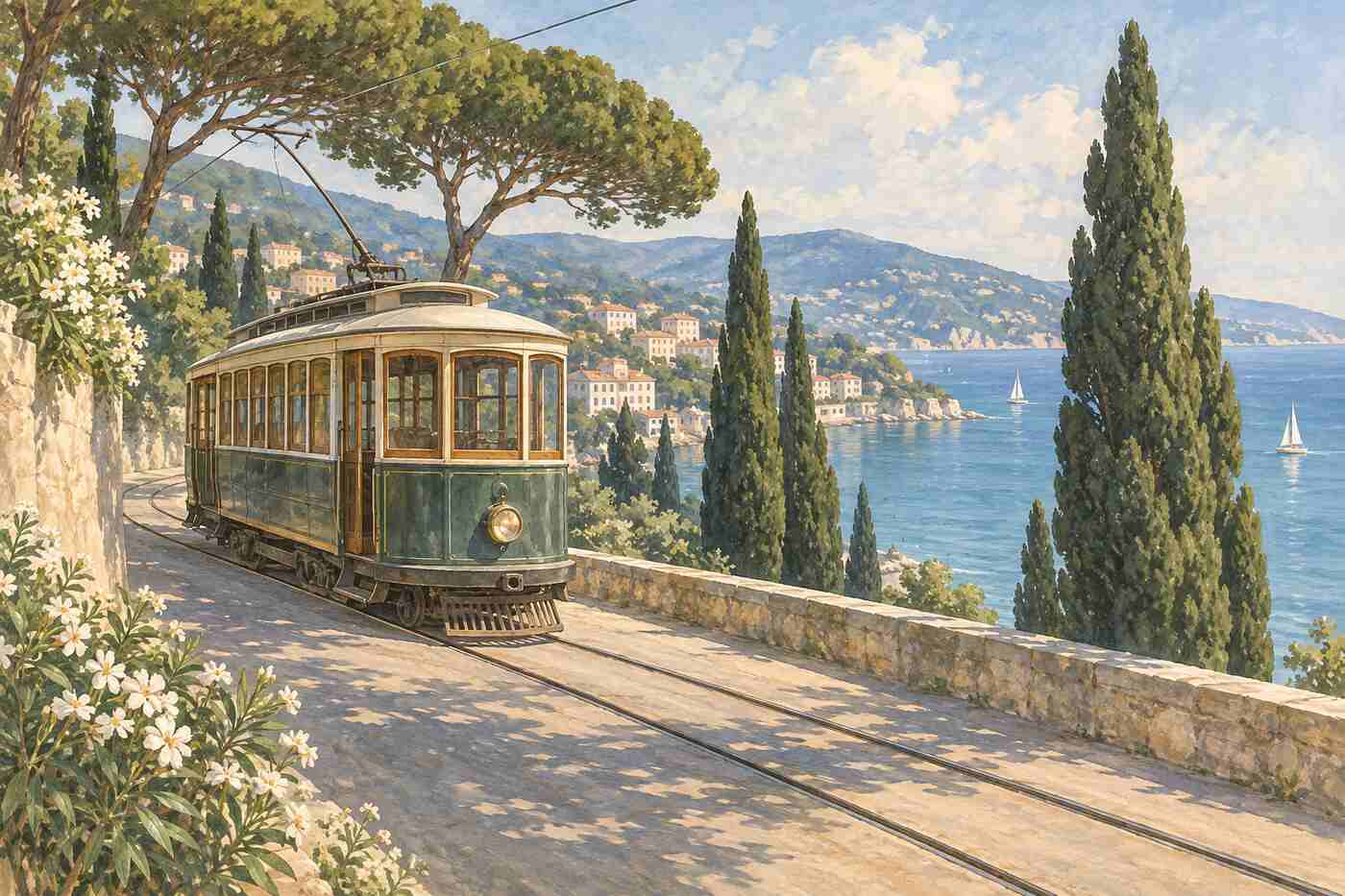
Transport came with the new commune. Before 1900 a stagecoach ran between Nice and Saint-Jean. From 1907 a tramway linked Nice to the village by way of Mont-Boron and Villefranche, until buses replaced it in 1931. The village’s first luxury hotel opened in 1904, according to the town hall, followed in 1908 by the Grand-Hôtel du Cap-Ferrat at the tip of the cape.
King Leopold II and the Belle Époque villas
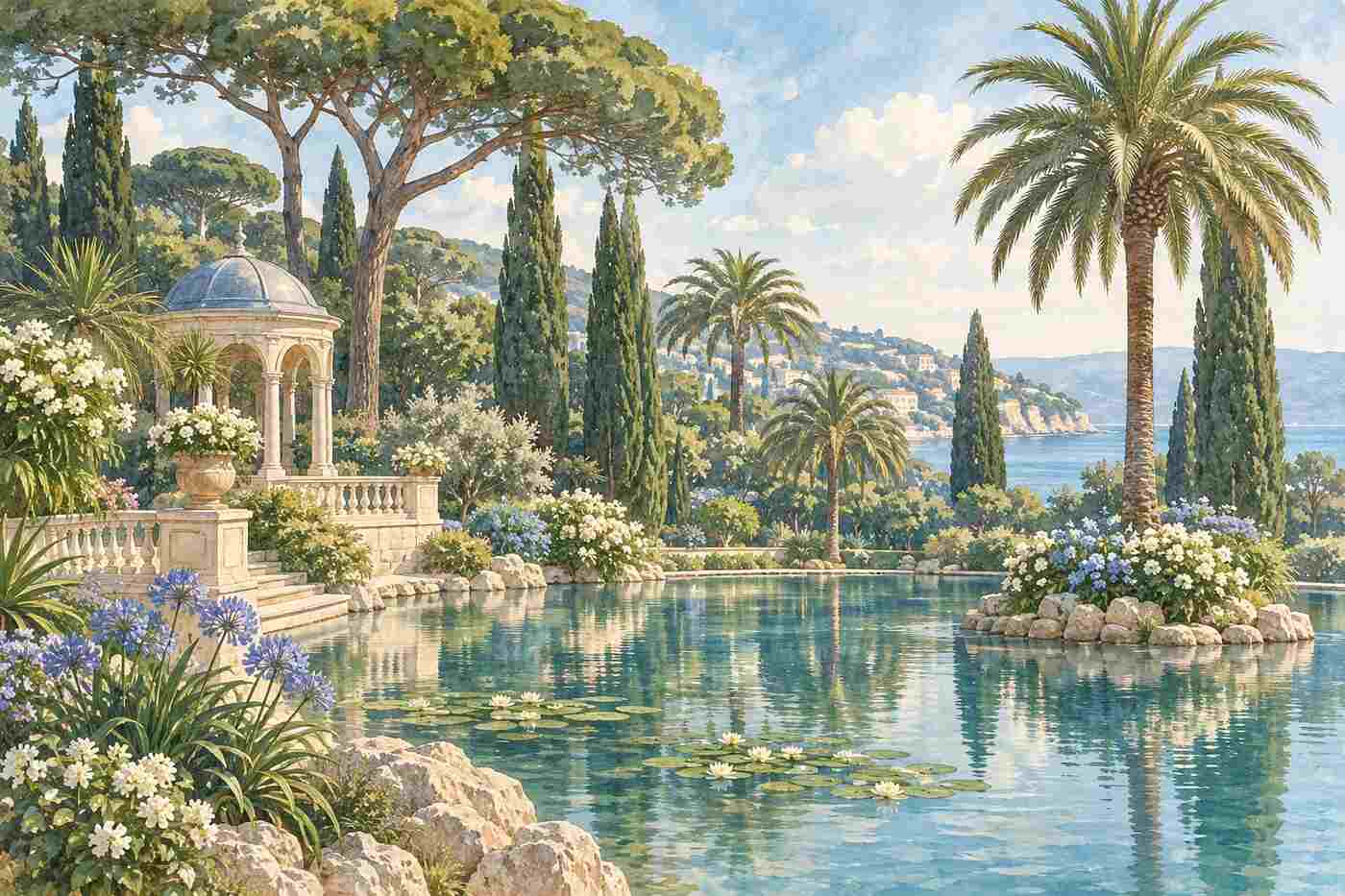
The peninsula’s transformation owes most to King Leopold II of Belgium. The sources disagree on when he arrived: the town hall says his interest began in 1899, an estate agency history gives 1895, and the town hall’s welcome guide dates his land buying to 1889. All agree that in 1904 he bought the villa of David Désiré Pollonnais, a former mayor of Villefranche, and renamed it Les Cèdres. A 20,400-cubic-metre artificial lake built at the end of the 19th century, says the town hall, allowed the bare headland to turn green.
When Leopold died in 1909, his houses passed to the Belgian state. During the First World War Les Cèdres served as a military hospital for about 1,300 wounded or sick Belgian soldiers from 1916 to 1919. In 1924 Alexandre Marnier-Lapostolle, creator of Grand Marnier, bought the estate, and part of it is now the Jardin botanique Les Cèdres. Nearby, Béatrice Ephrussi de Rothschild bought seven hectares in 1905; her story is told in our guide to the Villa Ephrussi de Rothschild.
Writers and artists on the cape
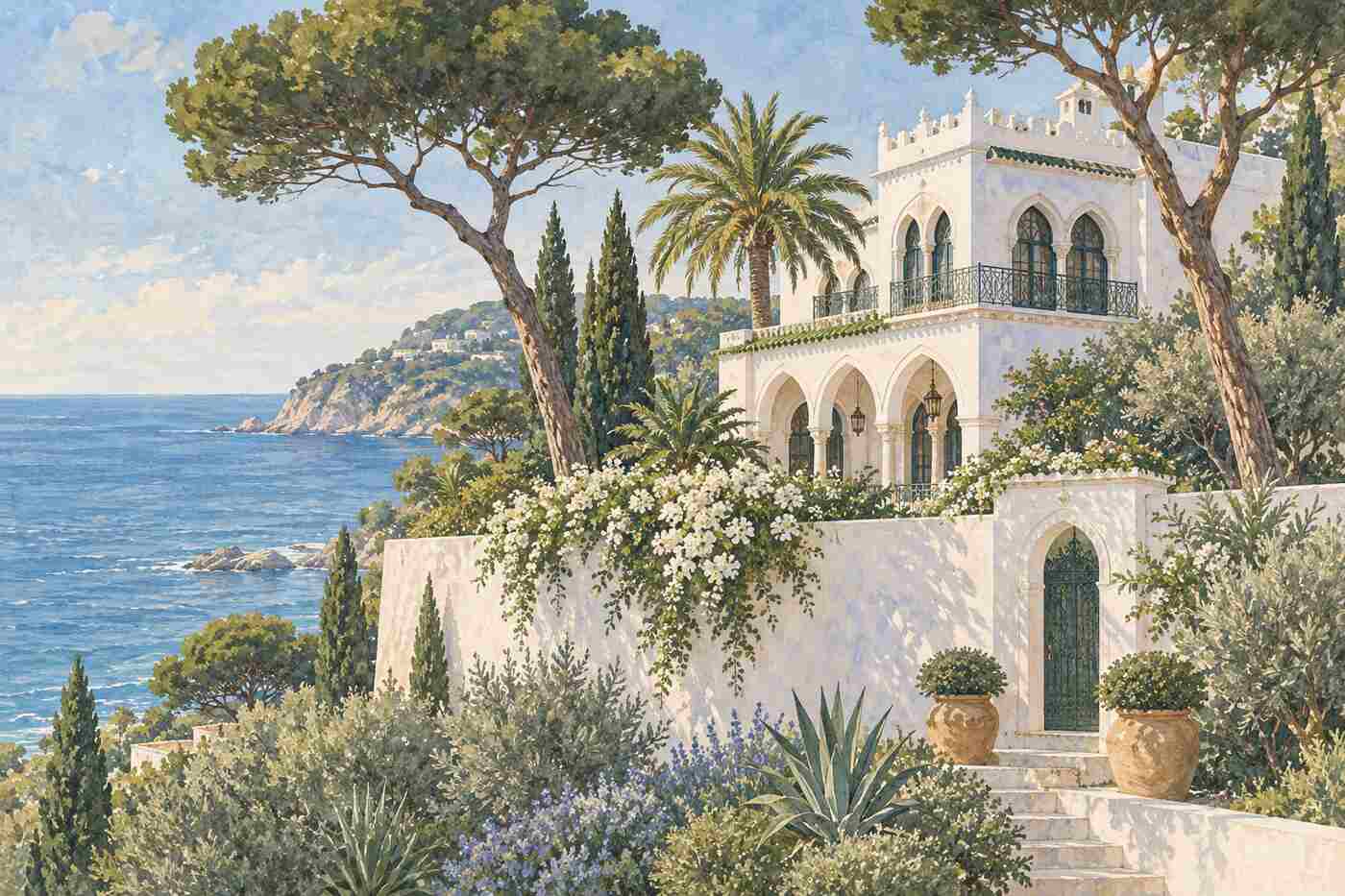
Somerset Maugham bought the Villa La Mauresque in 1927, according to the town hall and the national heritage inventory, and lived there until his death in 1965; a flag history site gives 1928 instead. The villa had been built around 1900 and was remodelled for Maugham by the architect Barry Dierks. In 1950 Jean Cocteau came to stay at the Villa Santo Sospir, which he decorated, and parts of his film The Testament of Orpheus were shot there. The publisher Tériade owned the Villa Natacha from 1946, where Henri Matisse designed a stained-glass window and a ceramic wall in 1951 and 1952. Winston Churchill painted the port in the 1920s, and a statue of him was unveiled on the quay in June 2023.
War, the lighthouse and the modern village
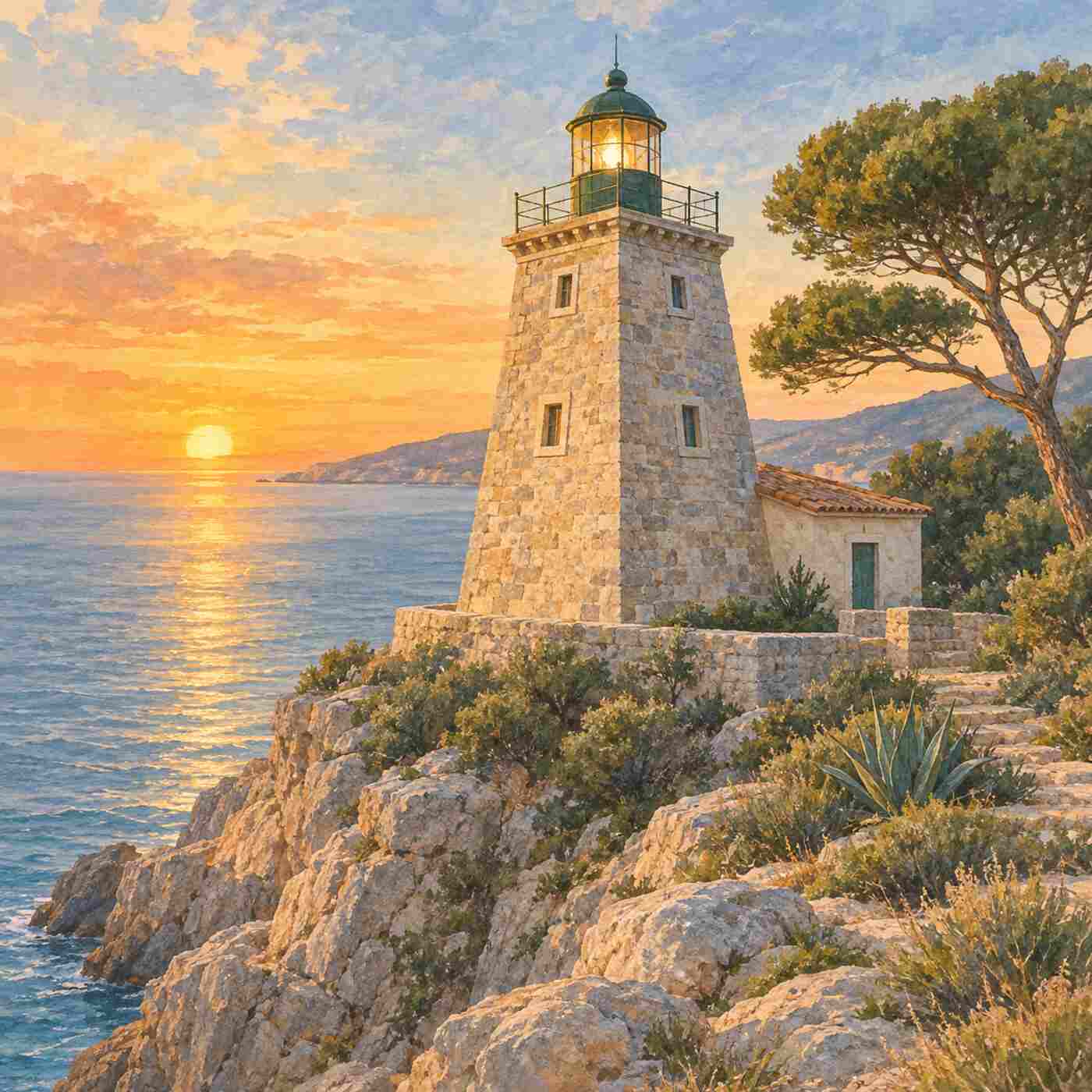
The Second World War emptied the peninsula. The town hall says it was already occupied by the Italian army when German forces arrived in February 1944 and ordered residents to leave; they were allowed home on 1 November 1944. The Germans destroyed the lighthouse in 1944. Its history goes back to 1732, when an existing fire tower was extended, and a lighthouse replaced the tower in 1837. It was rebuilt in its present square, canted form in 1951 and listed as a historic monument in 2012. It has 164 steps and stands 70 metres above sea level. Wikipedia dates the lighthouse to 1862, but that is the year Napoleon III organised the coastal semaphore network, according to the town hall.
The modern village grew around tourism. The new marina opened in 1972 and Wikipedia gives it 560 berths. The commune’s population was 2,356 in 1968 and 1,531 in 2023; the sources we used do not explain the decline. A single professional fisherman still works from the port, says the town hall.
Timeline
| Year | Event |
|---|---|
| 580 | Death of the hermit Hospitius |
| 1388 | County of Nice passes to Savoy |
| 1706 | Saint-Hospice fort destroyed |
| 1860 | County of Nice ceded to France |
| 1904 | Saint-Jean becomes a commune on 29 January |
| 1907 | Renamed Saint-Jean-Cap-Ferrat; tram arrives |
| 1944 | Evacuation and destruction of the lighthouse |
| 1972 | New marina opens |
Key takeaways
- Saint-Jean became a commune separate from Villefranche on 29 January 1904 and took its current name in 1907.
- The Saint-Hospice chapel and Genoese tower recall the peninsula’s hermit and its Savoy-era fort.
- King Leopold II’s estate, Les Cèdres, became a botanical garden owned by the Marnier-Lapostolle family from 1924.
- Maugham, Cocteau, Matisse and Churchill all spent time on the cape, and the lighthouse was rebuilt in 1951.
Common questions
When did Saint-Jean-Cap-Ferrat become a town?
The hamlet of Saint-Jean separated from Villefranche and became its own commune under a law of 29 January 1904. The town hall says it was first called Saint-Jean-sur-Mer and took the name Saint-Jean-Cap-Ferrat in 1907.
How many people live in Saint-Jean-Cap-Ferrat?
Wikipedia, citing the national statistics office, gives a population of 1,531 in 2023, on an area of 2.48 square kilometres. That is down from 2,356 in 1968, and the village is now much smaller than its fame suggests.
Can you visit Les Cèdres?
Les Cèdres is a private botanical garden that belonged to the Marnier-Lapostolle family from 1924. Access arrangements have changed over the years, so check with the Saint-Jean-Cap-Ferrat tourist office before planning a visit rather than relying on older guidebooks.
Where did Somerset Maugham live on Cap Ferrat?
Maugham lived at the Villa La Mauresque, which he bought in 1927 according to the town hall and the national heritage inventory, or 1928 according to some other sources. He lived there until his death in 1965. The villa remains a private house.
How we put this together: most dates come from the Saint-Jean-Cap-Ferrat town hall’s 120th anniversary heritage trail and its welcome guide; early history, population and the marina come from Wikipedia; La Mauresque’s dates come from the Mérimée heritage inventory and Wikipedia. Where the town hall and other sources disagree, as on the fort and Leopold II’s arrival, we give both.
Sources
- Mairie de Saint-Jean-Cap-Ferrat: L’expo plein air des 120 ans
- Mairie de Saint-Jean-Cap-Ferrat: Welcome guide
- Wikipedia: Saint-Jean-Cap-Ferrat
- Ministère de la Culture, Mérimée: Villa La Mauresque
- Wikipedia: Villa La Mauresque
- Alexandra Lloyd: A little history of Saint-Jean-Cap-Ferrat
- Flags of the World: Saint-Jean-Cap-Ferrat
- Explore Nice Côte d’Azur: Cap Ferrat lighthouse