
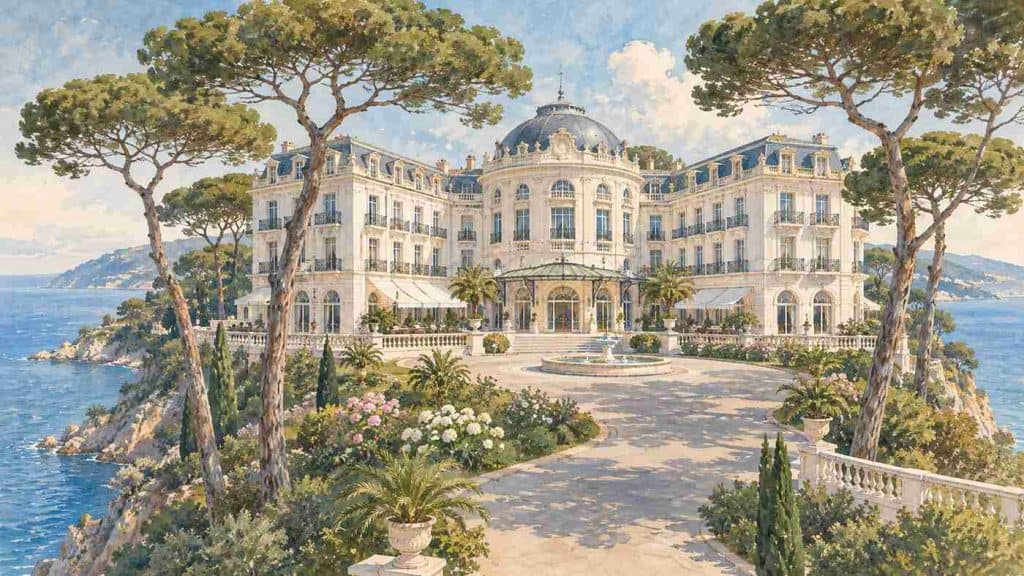
In short: The Grand-Hôtel du Cap-Ferrat opened in 1908 at the southern tip of the Cap Ferrat peninsula, between Nice and Monaco. It gained a rotunda in 1909, a seawater pool, the Club Dauphin, in 1939, France’s Palace distinction in 2011, and has been managed by Four Seasons since 8 May 2015.
Few hotels on the French Riviera have kept their original building, their original name and their place in the guidebooks for more than a century. The Grand-Hôtel du Cap-Ferrat has done all three. This guide follows its history from a land deal involving a Belgian king to its current life as a Four Seasons hotel, using the French heritage inventory, the hotel group’s own press history and reporting from newspapers and magazines. This site is an independent guide; it is not the hotel and takes no bookings.
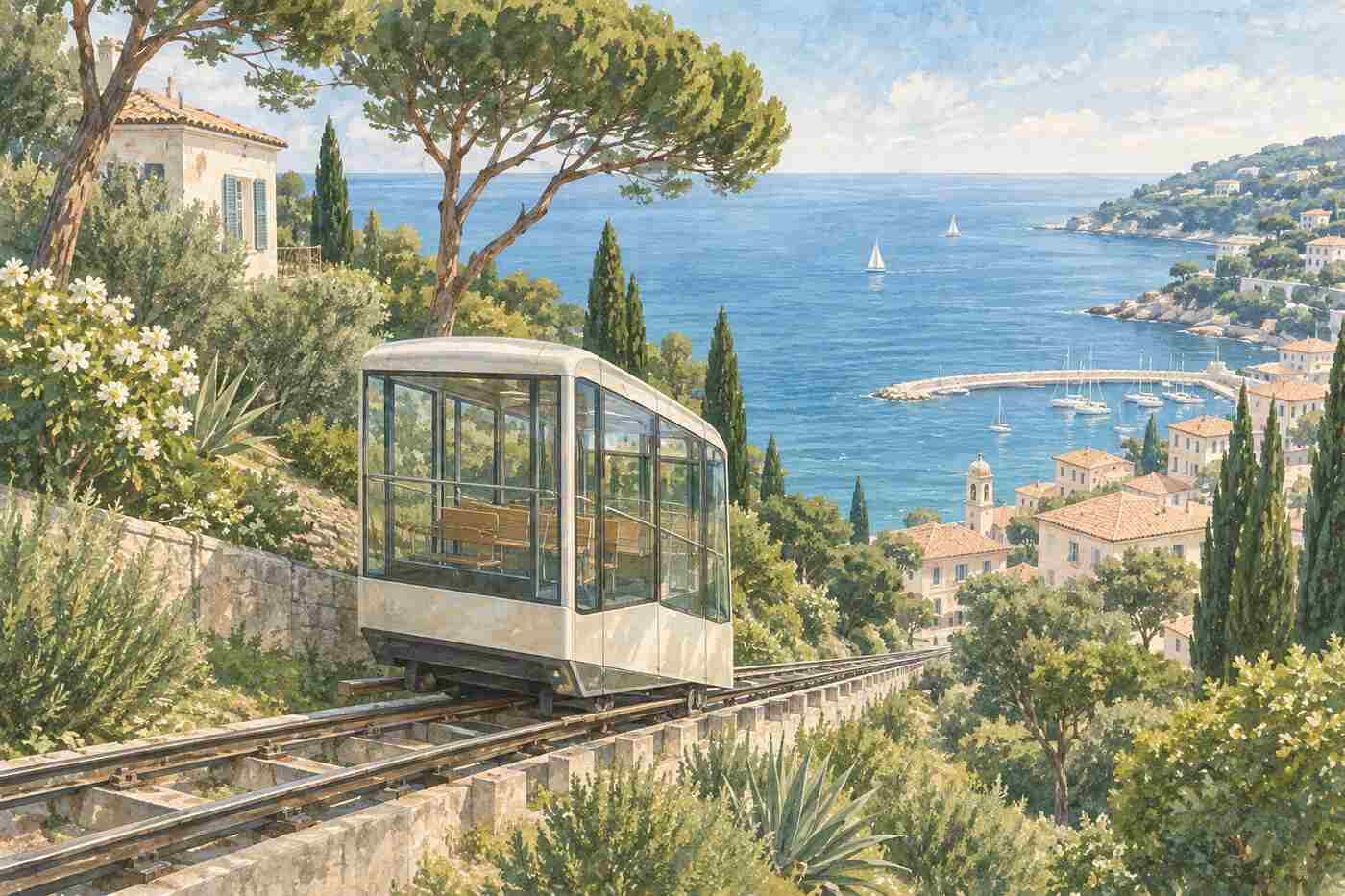
A few terms first. A palace hotel in France is a five-star hotel that has received the official Palace distinction, a state award created in 2010. The Belle Époque is the period of prosperity in France from about 1871 to 1914, when most of the Riviera’s grand hotels were built. A funicular is a cable railway on a steep slope, with a car pulled up and down a fixed track.
Who built the Grand-Hôtel du Cap-Ferrat?
The French Ministry of Culture’s heritage inventory, the Mérimée database, records that the architect Henri Martinet built the hotel from 1905 in a seven-hectare park for Bloch and Peretmère, the developers of the Cap-Ferrat housing estate. It opened in 1908 with 150 rooms and what the inventory calls modern comfort: central heating, electricity, bathrooms and a lift.
The land itself has a royal back story. According to the Four Seasons press office history, King Leopold II of Belgium, who bought much of the peninsula’s western side around the turn of the century, sold off nearly seven hectares of it in 1895 for the construction of a luxury hotel. Wikipedia’s account says he reserved six and a half hectares. Sources also differ on the opening month: Four Seasons and several local histories give January 1908, while the Famous Hotels archive gives February 1908 and notes that the hotel was first known as the Bel-Air.
The 1909 rotunda and the Eiffel question
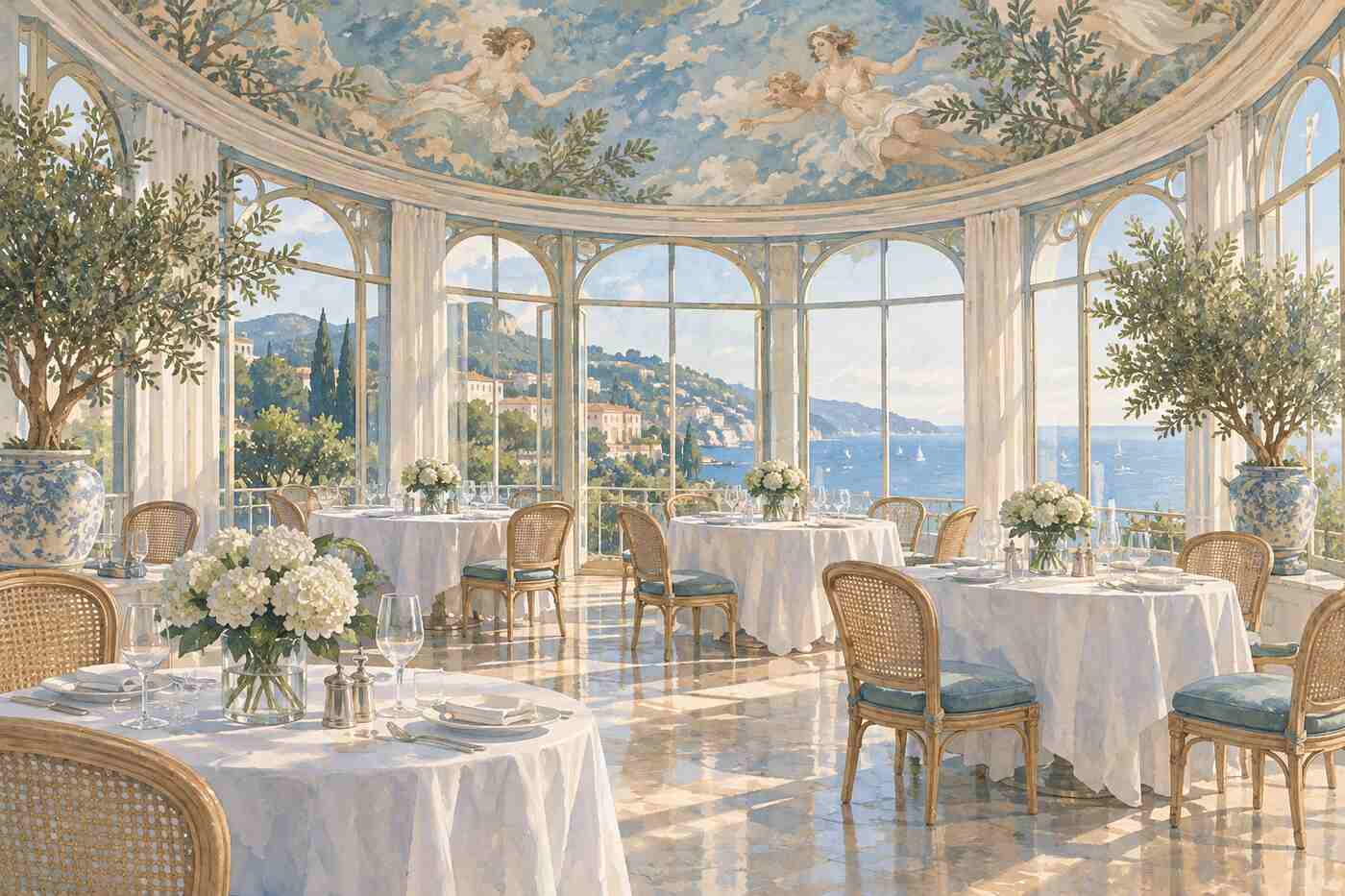
The first building had two wings set at an open angle to each other. In 1909 a loggia dining room and a large central rotunda with bay windows were added on the ground floor. The Four Seasons history states that the rotunda followed a design by Gustave Eiffel, the engineer behind the Eiffel Tower, who wintered in neighbouring Beaulieu-sur-Mer. The state heritage record does not name Eiffel; it simply says the ground floor was enlarged in 1909. We report the Eiffel attribution as the hotel’s own account rather than as an established fact.
The rotunda survives. Four Seasons lists it as part of the original building in its round-up of historic properties, and it remains the centre of the ground floor today.
War, sport and a new owner, 1914 to 1939
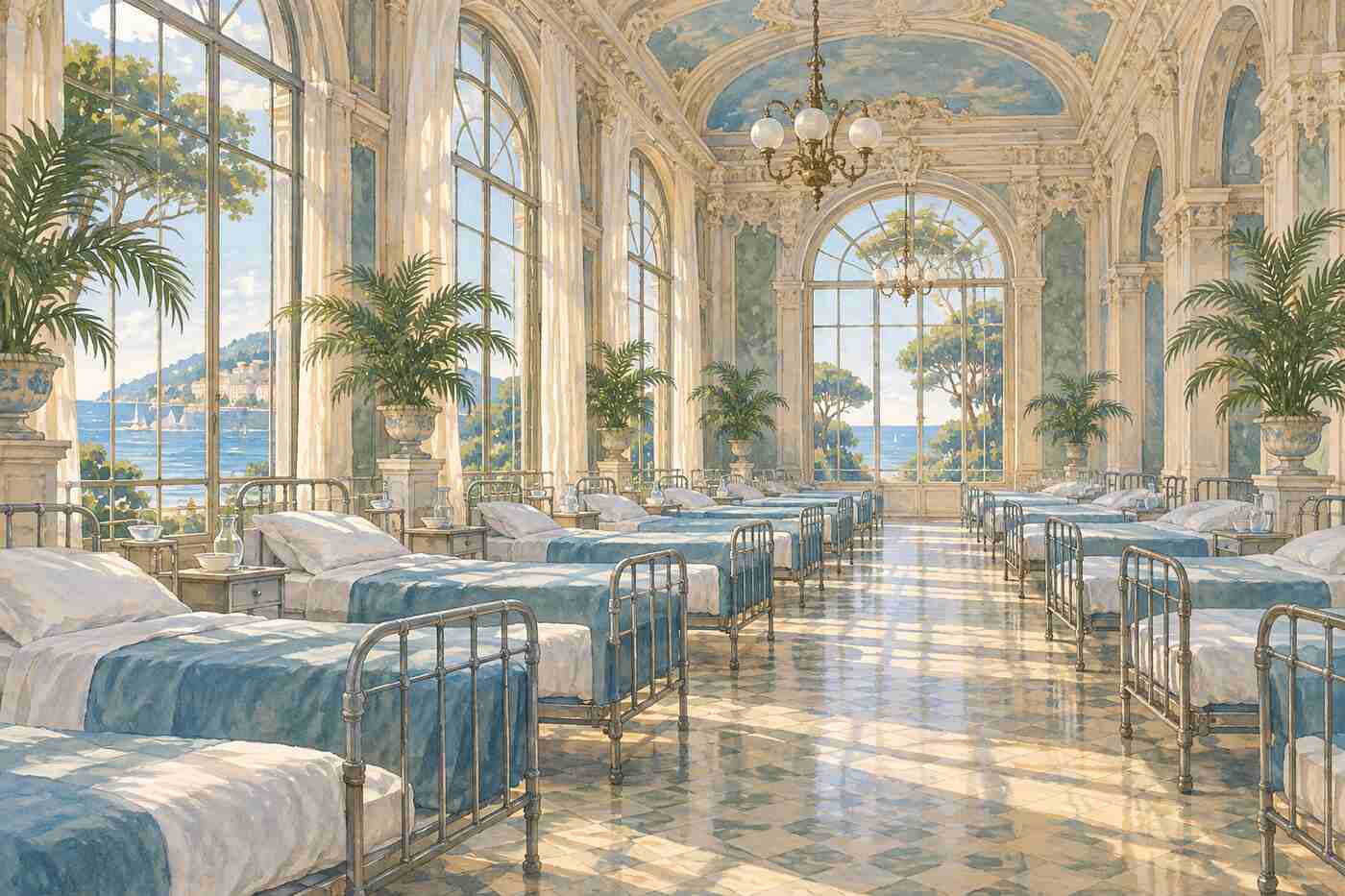
The hotel’s first decade was interrupted by war. Monaco Tribune reports that in 1914 the building was converted into a war hospital, as were many large hotels along the coast. In 1919, according to the Mérimée record, the hotel was sold to Léon Ferras, who added a tennis court, a croquet lawn, a pigeon-shooting range and garages with rooms for chauffeurs. A neighbouring plot became an 18-hole golf course in 1931.
Monaco Tribune adds that in the early 1930s the hotel became a film set for the 1933 version of Don Quichotte. By then the Riviera was changing from a winter resort into a summer one, and the hotel’s next addition would make it famous for swimming.
Club Dauphin: the 1939 pool
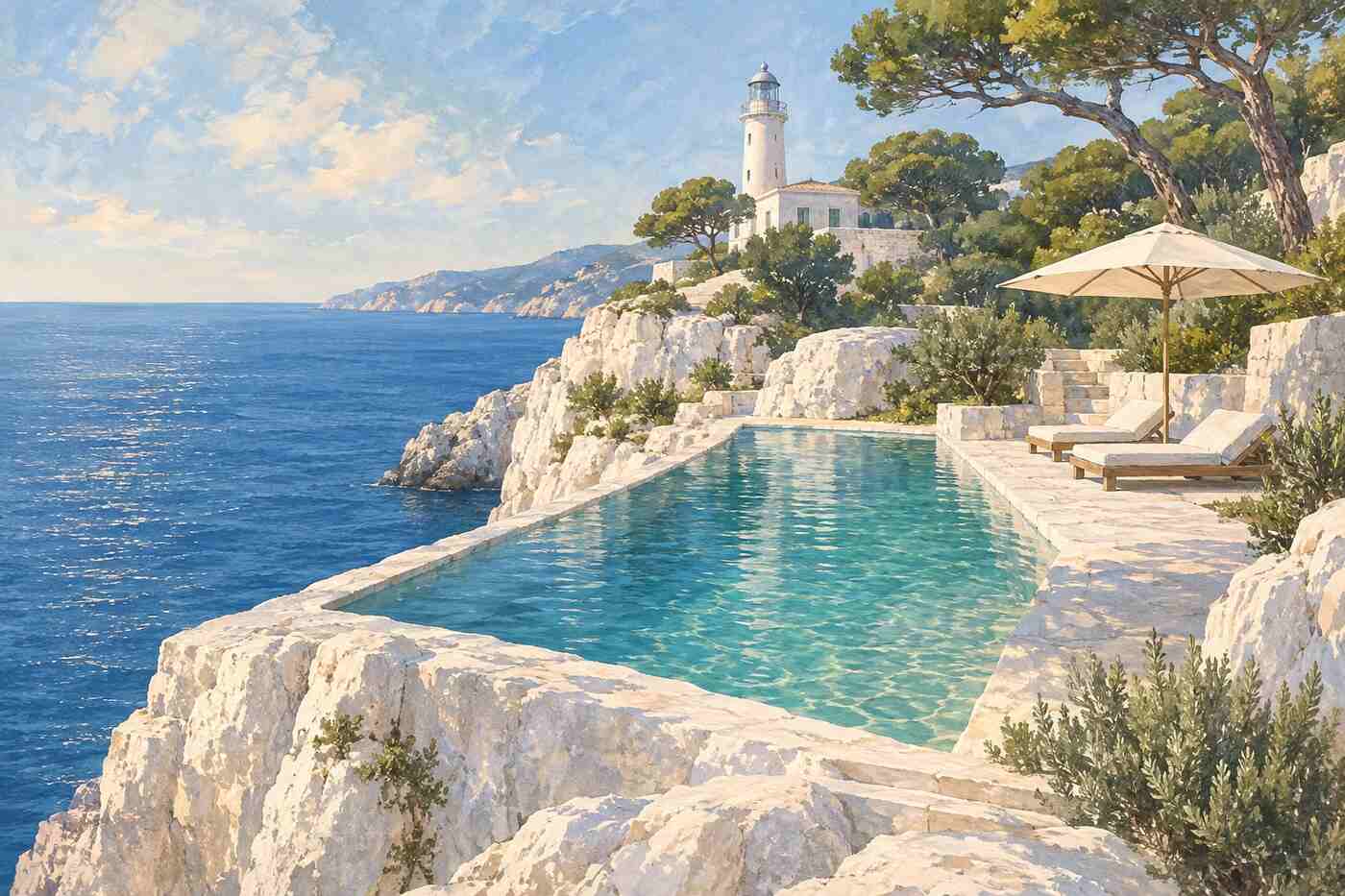
In 1939 a pool was built below the hotel, at the edge of the sea. Four Seasons describes it as 33 metres long, filled with seawater and heated to a constant 28°C. The hotel tells a colourful story about it: an Italian bricklayer is said to have built the structurally complex pool, then reappeared during the Italian occupation of the coast in military uniform, revealing himself as a spy. That story comes only from the hotel’s own magazine, and we have found no independent record of it.
What is well recorded is the pool’s most famous teacher. Pierre Gruneberg, born in Cologne in 1931, arrived in 1950 after hitchhiking from Paris, according to his obituaries in The Times and The Telegraph. He taught at the pool for about seven decades, using a breathing method he devised in 1953, and his pupils included Charlie Chaplin’s children, Elizabeth Taylor and Paul McCartney. He died on 4 June 2023, aged 92. Some magazines date his arrival to 1949; The Times explains that he hitchhiked south in 1949 and worked his first summer at the hotel in 1950.
Restoration, the Palace title and Four Seasons
The late 20th century added more building. The Mérimée record lists alterations in 1919 and 1939 and beach cabins in 1949 by the architect André Deperi. The Four Seasons history says a later project by the Nice architect Luc Svetchine added a residence wing, a spa with an indoor pool and underground parking, and travel press reports credit interiors refreshed by Pierre-Yves Rochon in 2009.
In May 2011 the hotel was among the first group of hotels to receive the Palace distinction, alongside Le Meurice and Le Bristol in Paris, according to the list of Palace hotels on Wikipedia. Riviera Magazine describes it as the first hotel on the Côte d’Azur to become a Palace. Four Seasons took over management on 8 May 2015, and the name changed to Grand-Hôtel du Cap-Ferrat, A Four Seasons Hotel. In June 2026 Atout France, the national tourism agency, again listed it among the 33 hotels holding the distinction.
Timeline
| Year | Event | Source |
|---|---|---|
| 1905 | Construction begins to plans by Henri Martinet | Mérimée inventory |
| 1908 | Hotel opens with 150 rooms | Mérimée, Four Seasons |
| 1909 | Loggia dining room and rotunda added | Mérimée, Four Seasons |
| 1914 | Converted into a war hospital | Monaco Tribune |
| 1919 | Sold to Léon Ferras | Mérimée inventory |
| 1939 | Seawater pool built below the hotel | Mérimée, Four Seasons |
| 2011 | Palace distinction | Wikipedia list, Riviera Magazine |
| 2015 | Four Seasons takes over management on 8 May | Wikipedia, Four Seasons |
Grand-Hôtel du Cap-Ferrat today
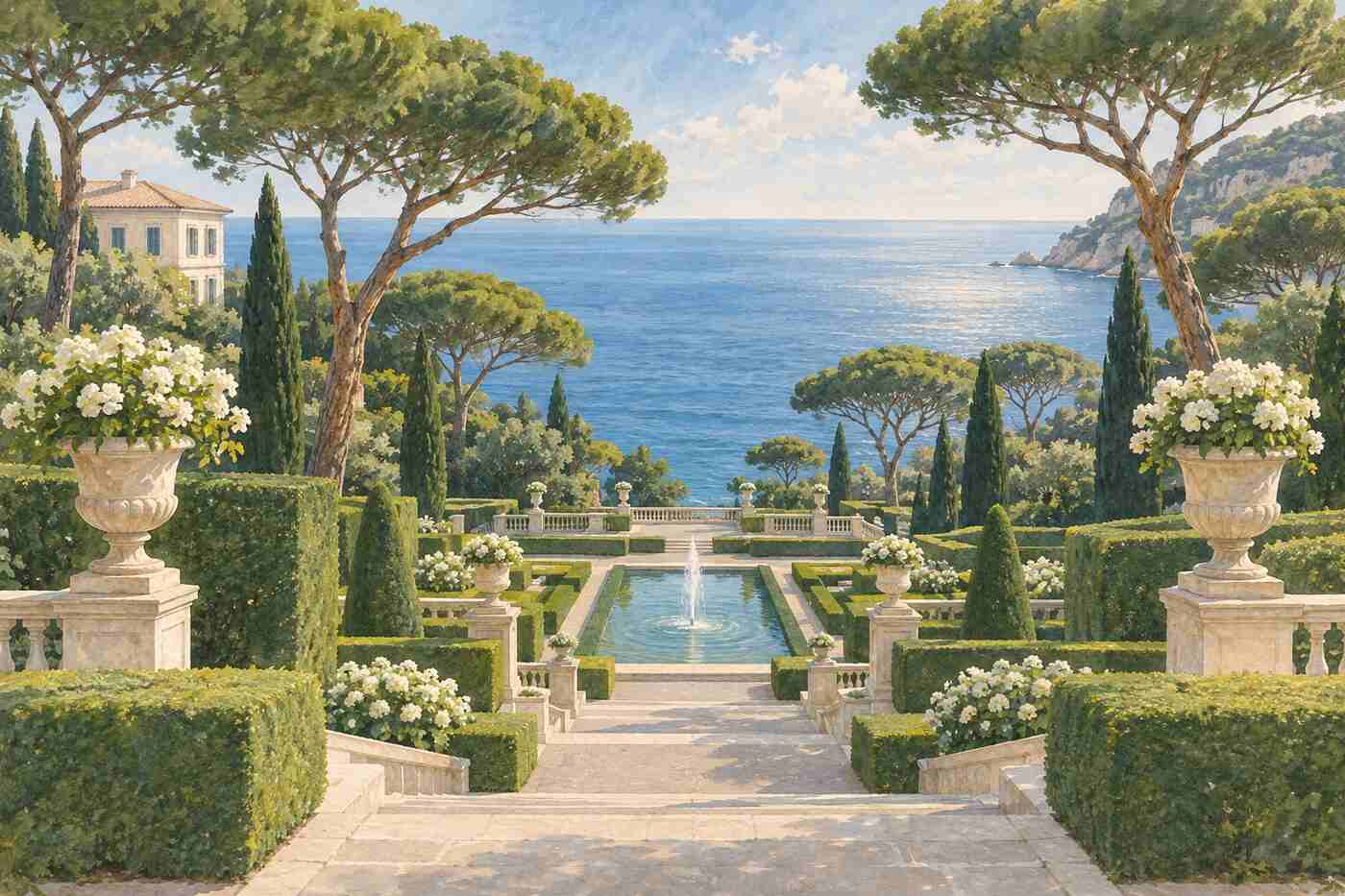
The hotel’s gardens are given as six hectares on the Four Seasons website, six and a half on Wikipedia and seven in the heritage inventory; the difference reflects how the grounds were measured and sold over time. Its restaurants, covered in our guide to Le Cap and La Véranda, include a Michelin-starred dining room. The coastal path passes below the grounds, as described in our Cap Ferrat coastal path guide, and the hotel’s story is bound up with the wider history of Saint-Jean-Cap-Ferrat and the other French Riviera palace hotels.
Key takeaways
- The Grand-Hôtel du Cap-Ferrat opened in 1908; the state inventory credits the architect Henri Martinet, with work from 1905.
- The 1909 rotunda is attributed to Gustave Eiffel by the hotel, but the heritage record does not name him.
- The Club Dauphin seawater pool dates from 1939, and Pierre Gruneberg taught swimming there from 1950 until his death in 2023.
- The hotel received the Palace distinction in May 2011 and has been run by Four Seasons since 8 May 2015.
Common questions
When did the Grand-Hôtel du Cap-Ferrat open?
It opened in 1908. Four Seasons and several local histories give January 1908, while the Famous Hotels archive gives February 1908. The French heritage inventory says construction began in 1905 and the hotel was inaugurated in 1908 with 150 rooms.
Did Gustave Eiffel design the Grand-Hôtel?
Not the whole building. The hotel group says the central rotunda added in 1909 followed a design by Gustave Eiffel. The state heritage inventory names Henri Martinet as the architect and does not mention Eiffel, so the attribution rests on the hotel’s own history.
How big is the Grand-Hôtel du Cap-Ferrat?
The Four Seasons fact sheet lists 75 rooms: 48 rooms, 24 suites and 3 villas, on a property of seven hectares. That is half the 150 rooms of the 1908 hotel recorded in the heritage inventory; the sources we used do not explain when the room count fell.
Who owns the Grand-Hôtel du Cap-Ferrat?
A 2015 press release reported that Access Industries appointed Four Seasons Hotels and Resorts to manage the hotel. Four Seasons runs it under a management agreement, which is why the official name became Grand-Hôtel du Cap-Ferrat, A Four Seasons Hotel.
How we put this together: construction dates, architects and the 1919 sale come from the Mérimée heritage inventory; the land story, the rotunda attribution and the pool details come from Four Seasons press and magazine pages; the wartime hospital and film set come from Monaco Tribune; the Palace dates come from Wikipedia, Riviera Magazine and Atout France; Pierre Gruneberg’s life comes from The Times and The Telegraph. Where they disagree, we say so.
Sources
- Ministère de la Culture, Mérimée: Grand Hôtel du Cap-Ferrat
- Four Seasons Press Room: The Legendary Grand-Hôtel du Cap-Ferrat, a history
- Four Seasons Magazine: Amazing hotel pools of the world
- Wikipedia: Grand-Hôtel du Cap-Ferrat
- Monaco Tribune: Grand-Hôtel du Cap, the Riviera’s great white lady
- The Times: Pierre Gruneberg obituary
- The Telegraph: Pierre Gruneberg obituary
- Wikipedia: Palace (hotel)
- Riviera Magazine: Grand Hotel du Cap-Ferrat
- Atout France: Établissements distingués Palace
- Four Seasons Press Room: Grand-Hôtel du Cap-Ferrat hotel facts
- Famous Hotels: Grand Hotel du Cap Ferrat
- PR Newswire: Access Industries appoints Four Seasons to manage the Grand-Hotel du Cap-Ferrat