
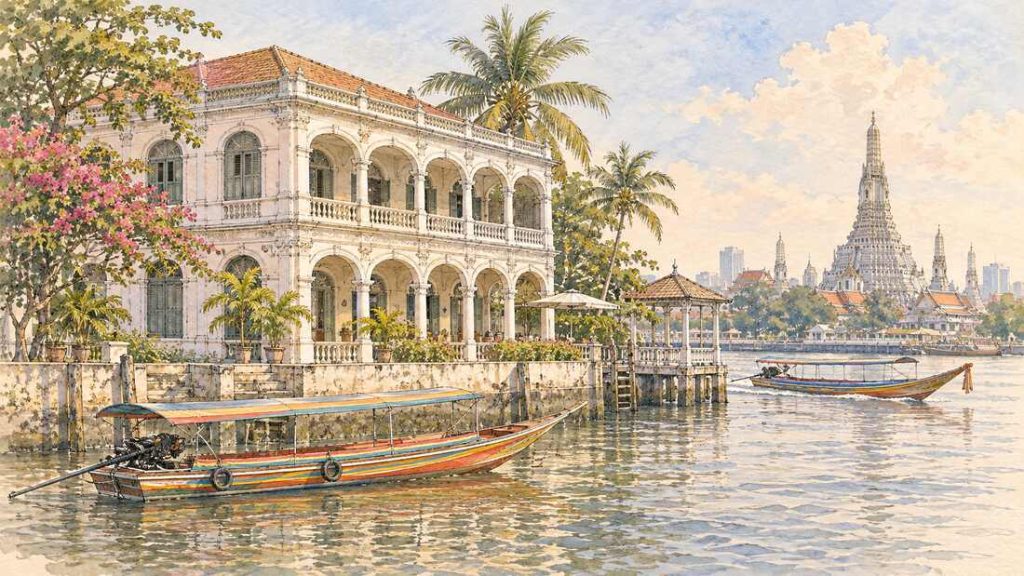
In short: Thailand has two grand hotels with a history to set beside the Riviera’s palaces. The Oriental in Bangkok, now Mandarin Oriental, dates its current hotel to 1876 and its oldest wing to the 1880s, and has hosted kings, princes and writers for 150 years. The Railway Hotel at Hua Hin, built by the State Railway and opened in 1923, made the town Thailand’s first beach resort. Both are still working hotels you can stay in or visit for tea.
Updated 19 November 2026 by Cap Ferrat Chronicle editors
The French Riviera’s grand hotels were built for a new kind of traveller: wealthy, mobile and arriving by train or steamer. The Grand-Hôtel du Cap-Ferrat opened in 1908, and the coast’s best addresses now carry France’s Palace distinction. The same forces, steamships, railways and royal patronage, produced grand hotels in Southeast Asia at almost the same time.
Among the grand hotels in Thailand, two stand out: Mandarin Oriental Bangkok and the Railway Hotel Hua Hin. One is a riverside hotel in Bangkok that has just marked its 150th anniversary. The other is a seaside hotel built by a railway company to fill its trains. This guide tells their stories, explains what you can still see, and compares them with the Riviera hotels we cover on this site.
What are the heritage grand hotels in Thailand?
In Thailand, as in France, “grand hotel” is not an official rank. It describes a hotel built in the late nineteenth or early twentieth century for international travellers, usually in a European style, that has stayed in use and kept its original buildings. Thailand has a number of old hotels, but two have the history, the surviving architecture and the guest lists to match the Riviera’s best.
- The Oriental, Bangkok. Founded on the Chao Phraya river in the 1870s, now Mandarin Oriental, Bangkok. The original wing still stands.
- The Railway Hotel, Hua Hin. Built by the State Railway of Siam and opened in 1923, now Centara Grand Beach Resort and Villas Hua Hin. The colonial-style main building still faces the beach.
Both are run by large hotel groups today, and both have been modernised. What makes them heritage hotels is that you can still walk through the rooms and gardens their first guests used.
Mandarin Oriental Bangkok history: 150 years on the river
According to Mandarin Oriental’s own history, the first hotel on the site burned down in 1865. In 1876 two Danish sea captains, H. Jarck and C. Salje, opened The Oriental, described as the first luxury hotel in Siam. The 1876 date was adopted as the founding year in 1976, and the hotel celebrated its 150th anniversary with three evenings of events from 18 to 20 November 2026.
In the 1880s the Danish businessman H. N. Andersen, who went on to found the East Asiatic Company, took over the hotel and commissioned the Italian architects Cardu and Rossi to build a new wing. That building, finished in the mid-1880s, is now called the Authors’ Wing and is the oldest part of the hotel. Famous Hotels, the heritage-hotel network, dates it to 1885.
Royal visitors came early. Mandarin Oriental records that King Chulalongkorn (Rama V) visited on 17 December 1890, and that in April 1891 the hotel hosted Crown Prince Nicholas of Russia, later Tsar Nicholas II. The Garden Wing followed in 1958, when the photographer Germaine Krull was a partner in the hotel and the rooftop restaurant Le Normandie opened. The modern River Wing was opened in 1976 by Queen Sirikit.
The writers’ hotel
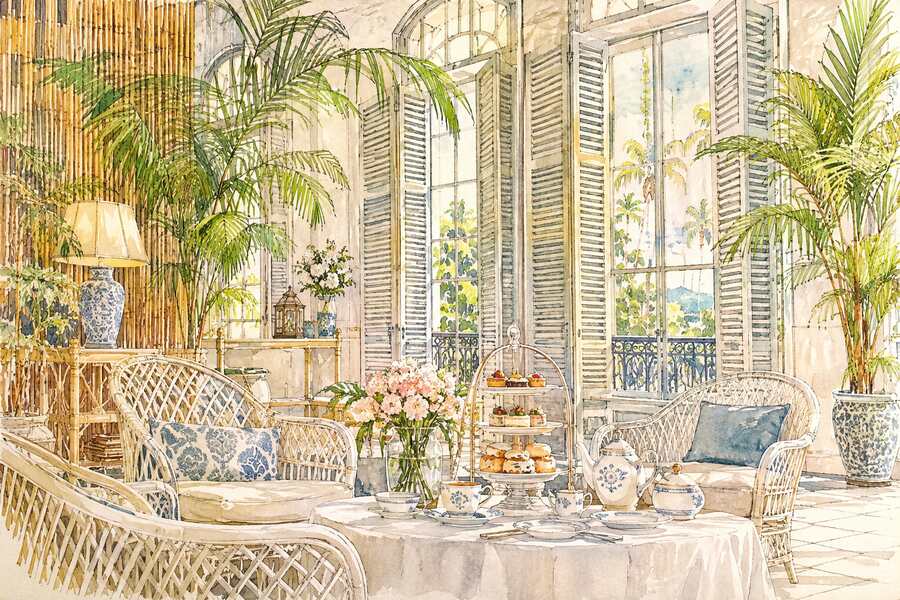
The Oriental is best known for its writers. The suites of the Authors’ Wing are named after guests including Joseph Conrad, Somerset Maugham, Noël Coward and James Michener, and John le Carré wrote part of The Honourable Schoolboy there. Since 1979 the hotel has hosted the S.E.A. Write Award, a literary prize for writers from Southeast Asia. The Authors’ Lounge, a white, palm-filled room in the old wing, serves afternoon tea to guests and visitors.
The hotel has been renovated in stages. The Authors’ Wing and Garden Wing were restored in 2016, and Mandarin Oriental says the River Wing had a USD 90 million renovation in 2019. Today it has 331 rooms and suites. For a fuller profile of the hotel as it is now, with rooms and restaurants, ThailandWiki has a guide to Mandarin Oriental Bangkok.
The Railway Hotel Hua Hin: a resort built by trains
Hua Hin is about 200 kilometres south of Bangkok on the Gulf of Thailand. Centara, which runs the hotel today, says the railway reached the town in 1911, and that members of the royal family soon built seaside residences there. A town grew up around the court’s summer visits.
In 1922 the State Railway of Siam decided to build a European-style hotel by the beach to bring passengers to the line, along with a golf course backed by King Vajiravudh (Rama VI). Prince Purachatra, the head of the railways, oversaw the project, and the Railway Hotel opened in 1923. Centara calls it Thailand’s first beach resort. In the same year, on the Riviera, the Hôtel du Cap-Eden-Roc opened for its first summer season, a sign that seaside holidays in the sun were becoming fashionable in Europe and Asia at the same time.
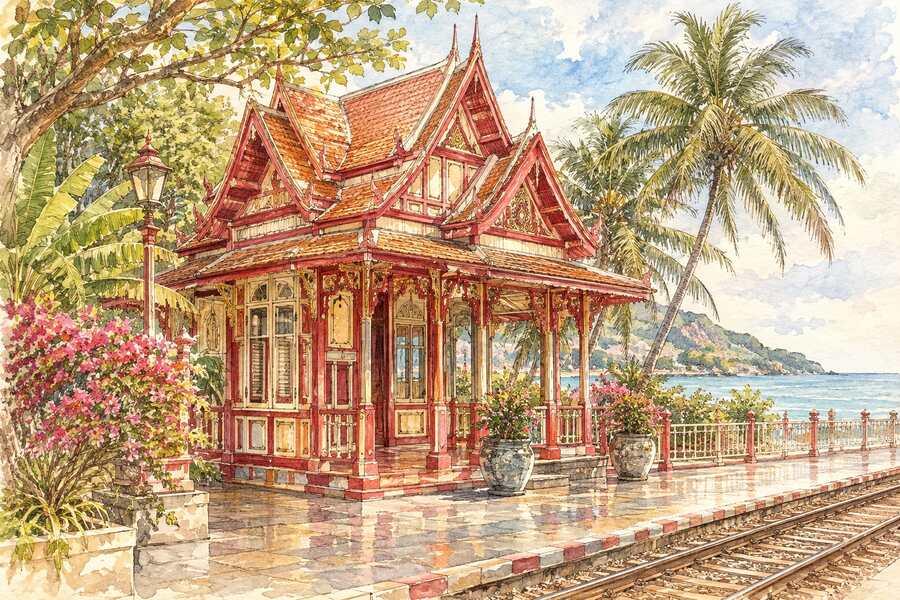
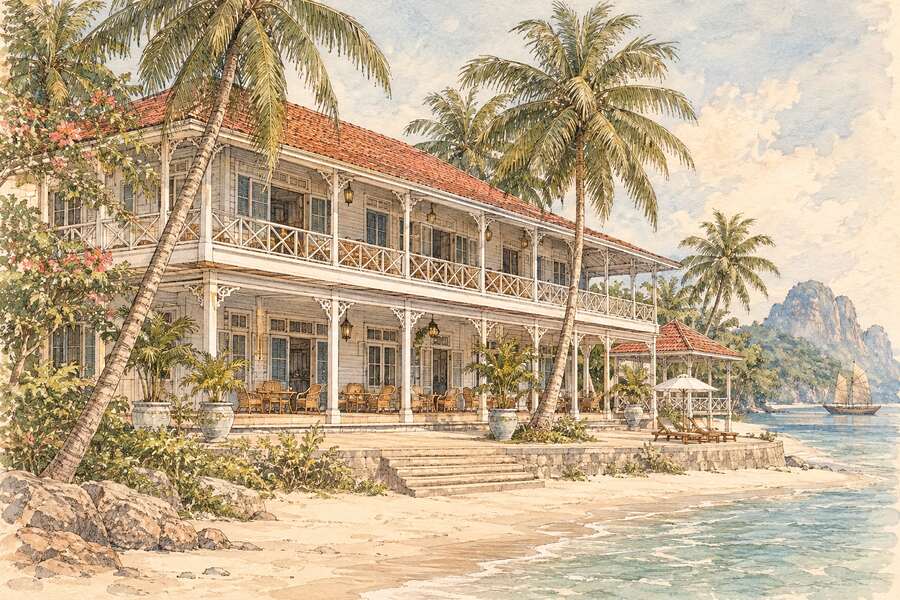
The hotel was built of wood in a colonial style, with red tiled roofs, deep verandas and long corridors to catch the sea breeze. The royal waiting room at Hua Hin station, a small red and cream wooden pavilion, still stands and is one of the most photographed buildings in the town.
Restoration and the film set years
By the 1980s the hotel needed major work. In 1986 the State Railway gave the rights to restore and run it to Central and Accor, and it reopened under the Sofitel name in 1988. The restoration kept the original building, the white wooden facade and the gardens. Centara took over operation later and runs it as Centara Grand Beach Resort and Villas Hua Hin.
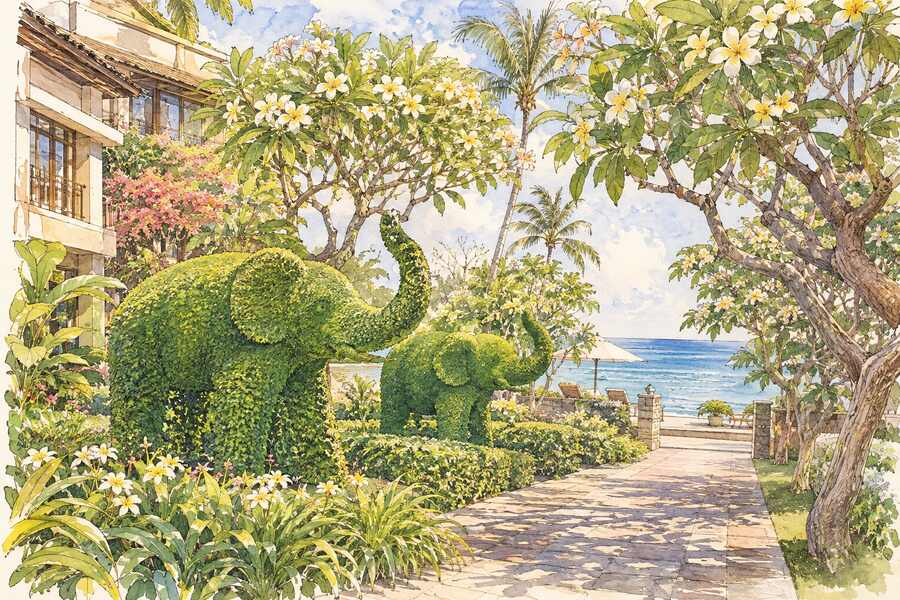
The gardens are the hotel’s signature. They cover about 13 hectares between the old building and the sea, and are known for their clipped topiary, including elephants.
How do they compare with the Riviera’s grand hotels?
The parallels with the Côte d’Azur are close. The table sets the three hotels side by side.
| Hotel | Opened | Built for | Run today by |
|---|---|---|---|
| The Oriental, Bangkok | 1876 (oldest wing 1880s) | Steamship travellers on the Chao Phraya | Mandarin Oriental |
| Railway Hotel, Hua Hin | 1923 | Railway passengers and the royal seaside season | Centara |
| Grand-Hôtel du Cap-Ferrat | 1908 | Winter visitors to the Riviera | Four Seasons |
- Transport made them. The Riviera grew around the Paris-Lyon-Méditerranée railway and the Train Bleu; Hua Hin was built around the Southern Line. The Oriental, like many Riviera hotels with their own jetties, was built to be reached by boat.
- Royal patronage. Queen Victoria’s visits to Nice and Leopold II of Belgium’s estates on Cap Ferrat drew society to the coast. In Thailand, King Chulalongkorn’s visit to the Oriental and the court’s summers in Hua Hin did the same.
- Writers and artists. Somerset Maugham lived at the Villa Mauresque on Cap Ferrat for decades and also stayed at the Oriental, where a suite carries his name.
- Restoration rather than replacement. The Grand-Hôtel du Cap-Ferrat, the Oriental and the Railway Hotel were all modernised around their original buildings rather than torn down.
The main difference is the season. The Riviera hotels were built for the winter and later the summer season, and many still close for part of the year. Thailand’s hotels open all year, and the cool, dry months from November to February are the busiest.
Visiting tips
- Afternoon tea at the Oriental. The Authors’ Lounge is the easiest way to see the old wing without staying. Booking ahead is wise, and neat dress is sensible; check the hotel’s current dress guidance before you go.
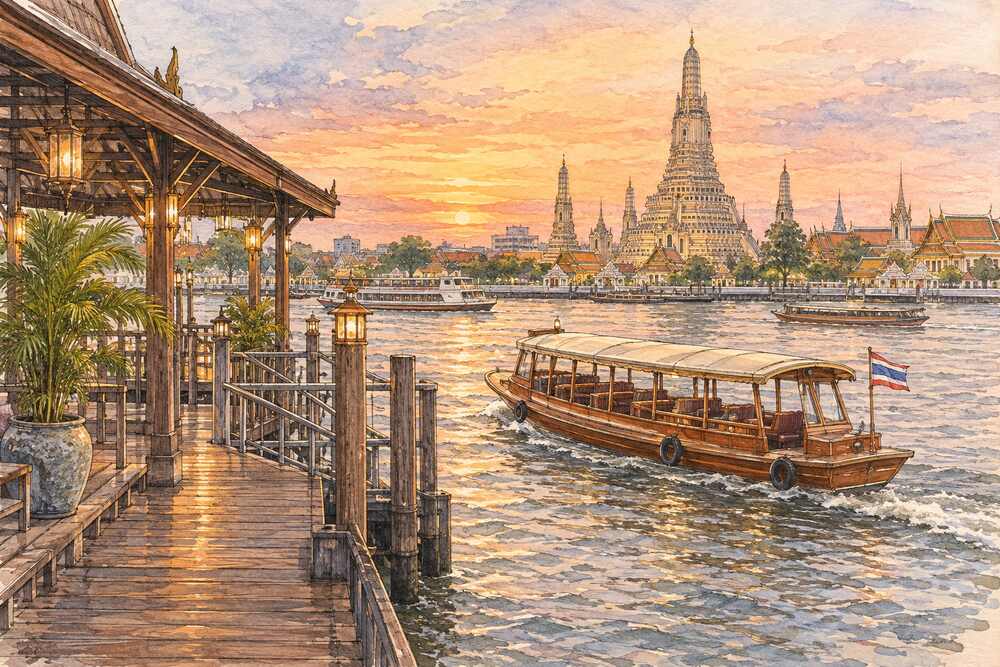
- Arriving by river. The hotel has its own pier on the Chao Phraya, and its shuttle boat crosses to its spa and restaurants on the other bank.
- Getting to Hua Hin. Trains still run from Bangkok to Hua Hin station, a few minutes from the hotel. The drive takes about three hours.
- Best time. November to February is cooler and drier in both Bangkok and Hua Hin.
Key takeaways
- Mandarin Oriental, Bangkok dates its current hotel to 1876 and its oldest building, the Authors’ Wing, to the mid-1880s.
- The Oriental hosted King Chulalongkorn in 1890 and the future Tsar Nicholas II in 1891, and marked its 150th anniversary on 18 to 20 November 2026.
- The Railway Hotel at Hua Hin was built by the State Railway of Siam, opened in 1923 and is described as Thailand’s first beach resort.
- Like the Riviera’s grand hotels, both grew from new transport links and royal patronage, and both were restored around their original buildings.
Common questions
What is the oldest hotel in Thailand?
The Oriental in Bangkok, now Mandarin Oriental, is generally described as Thailand’s first luxury hotel. Its current history starts in 1876, when two Danish captains opened The Oriental after an earlier building burned down in 1865. Its oldest surviving building, the Authors’ Wing, dates from the mid-1880s.
Can you visit the Mandarin Oriental Bangkok without staying?
Yes. Non-guests can book afternoon tea in the Authors’ Lounge in the original wing, and the hotel’s restaurants and bars are open to visitors. Check the hotel’s current dress guidance before you go.
Why is the Hua Hin hotel called the Railway Hotel?
It was built by the State Railway of Siam and opened in 1923 to bring passengers to the Southern Line after the railway reached Hua Hin in 1911. It is now Centara Grand Beach Resort and Villas Hua Hin.
How old is the Centara Grand in Hua Hin?
The original Railway Hotel opened in 1923, so the building is more than a century old. It was restored after 1986 and reopened as a Sofitel in 1988 before Centara took over operation.
Are there palace hotels in Thailand like in France?
No. The Palace distinction is a French award given only to French five-star hotels. Thailand has no equivalent title, but the Oriental and the Railway Hotel have a similar heritage to the Riviera’s palaces.
How we put this together: the Oriental’s dates and guests come from Mandarin Oriental’s published history, renovation notes and anniversary announcement, with a cross-check from Famous Hotels; the Hua Hin history comes from Centara’s hotel history and factsheet; the Riviera comparisons come from our own guides on this site. We have not stayed at these hotels for this guide.
Sources
- Mandarin Oriental, Bangkok: history
- Mandarin Oriental, Bangkok: Authors' Lounge
- Mandarin Oriental, Bangkok: renovation of the historic wings
- Business Insider: Mandarin Oriental 150th anniversary events
- Famous Hotels: The Mandarin Oriental Bangkok
- Centara: history of Centara Grand Hua Hin
- Centara Grand Hua Hin factsheet